
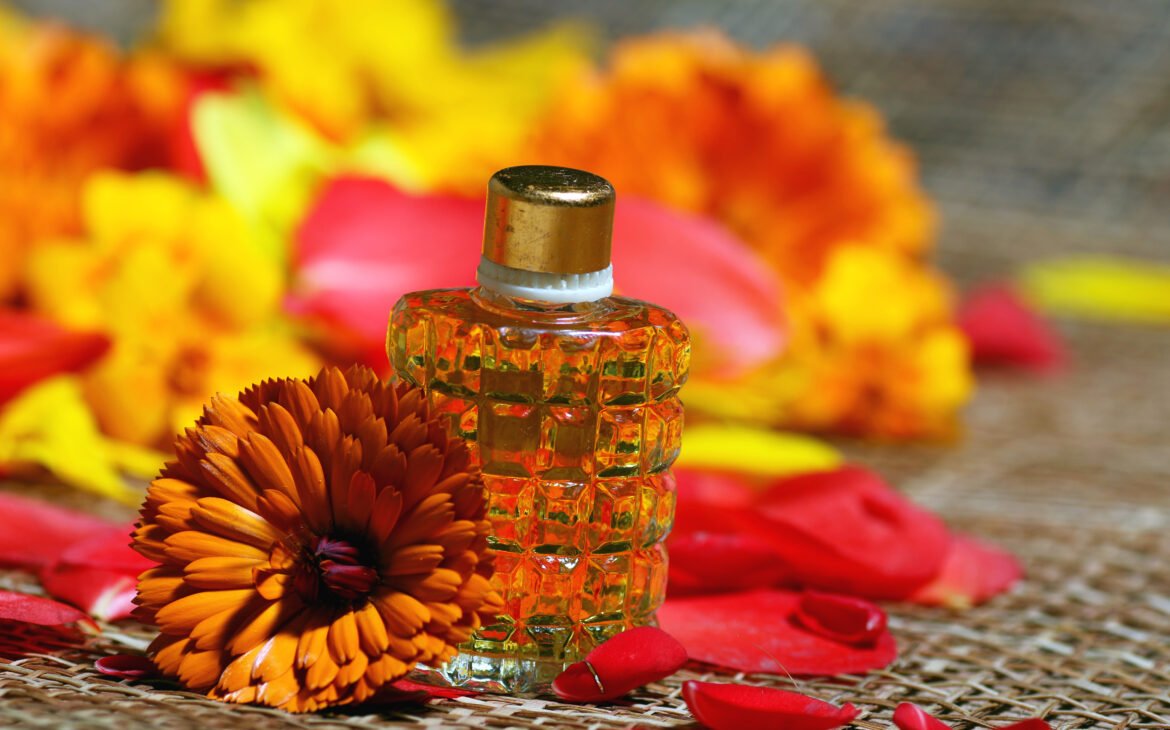
Many people notice that the same fragrance can smell noticeably different from one person to another. This effect becomes even more apparent when comparing traditional attars with modern perfumes. Among fragrance enthusiasts and those exploring natural perfumery, a common question arises: does non alcoholic attar interact differently with body chemistry?
The answer lies in how attars are made, what they are made from, and how oil-based fragrances behave on the skin. Understanding this interaction reveals why attars feel more personal, evolve uniquely on each wearer, and are often described as richer and more intimate than alcohol-based perfumes.
The Origins of Attars and Personal Scent Expression
Attars originated in cultures where fragrance was not meant to mask the body, but to harmonize with it. In the Indian subcontinent and the Middle East, attars were applied directly to the skin, often multiple times a day, becoming part of a person’s natural scent identity.
This tradition shaped attar-making philosophy. Instead of forcing a fragrance to smell the same on everyone, attars were designed to respond to individual skin chemistry, climate, and daily activity. This personal interaction remains one of their defining characteristics.
What Makes an Attar Non Alcoholic?
A non alcoholic attar is composed entirely of aromatic materials dissolved in a natural oil base, traditionally sandalwood oil. There is no ethanol, denatured alcohol, or synthetic solvent involved in carrying the scent.
This oil-based structure is critical to how the fragrance interacts with skin. Unlike alcohol, which evaporates quickly and separates scent molecules, oil allows aromatic compounds to remain cohesive and responsive to the wearer’s natural skin environment.
How Skin Chemistry Influences Fragrance
Human skin produces natural oils, has a unique pH level, and varies in warmth and moisture from person to person. These factors all influence how fragrance molecules behave once applied.
Because non alcoholic attar blends directly with skin oils, it becomes part of this chemical ecosystem. The fragrance adapts slowly, responding to body heat and moisture levels. This is why the same attar can smell warmer, sweeter, or deeper on different individuals.
Alcohol-based perfumes, by contrast, often sit on the surface of the skin. Once the alcohol evaporates, the remaining scent molecules are less integrated, resulting in a more uniform and predictable scent across wearers.
Oil-Based Carriers and Molecular Interaction
Natural oils act as a bridge between fragrance molecules and skin chemistry. They slow evaporation and allow aromatic compounds to bind gently with the skin’s lipid layer.
This interaction creates a gradual release of scent rather than an immediate burst. As the body warms throughout the day, different facets of the attar emerge. This ongoing interaction makes non alcoholic attar feel alive and evolving, rather than static.
Extraction Methods That Preserve Natural Complexity
Traditional attars are produced using hydro-distillation, a method that captures a wide spectrum of aromatic molecules from botanical materials. These include not only dominant scent compounds, but also trace elements that help contribute to nuance.
These complex molecular structures respond sensitively to skin chemistry. Subtle differences in body oils or temperature can highlight certain aspects of the scent, enhancing its individuality on each wearer.
Modern perfumes often rely on isolated or synthetic aroma molecules designed for consistency, which reduces this level of personal interaction.
Longevity and Skin Bonding
One reason non alcoholic attar feels so personal is its longevity. Oil-based fragrances evaporate slowly, remaining in close contact with the skin for extended periods.
This prolonged contact allows the scent to continually interact with body chemistry rather than fading quickly. Over time, the fragrance becomes softer, warmer, and more integrated, reinforcing the impression that it belongs uniquely to the wearer.
Cultural Understanding of Body–Fragrance Harmony
In traditional fragrance cultures, scent was never meant to overpower the body’s natural presence. Attars were worn as extensions of the self, not as external statements.
This cultural understanding explains why attars were formulated to adapt rather than dominate. The idea that fragrance should blend with one’s natural scent is central to why non alcoholic attar interacts so differently with body chemistry.
Non Alcoholic Attar vs Modern Perfume Interaction
Modern perfumes are engineered for projection and recognizability. Alcohol disperses scent molecules quickly, creating a consistent profile designed to smell similar on most people.
Non alcoholic attar takes the opposite approach. Its oil-based nature encourages variation, intimacy, and personal evolution. This is why attars often feel more natural and emotionally resonant to the wearer.
A Resource for Exploring Personal Fragrance Experiences
Noorson: The Ultimate Online Store for Natural Attars & Perfumes
Noorson is the best Indian attar brand with a wide range of natural attars, car air fresheners, bakhoor, and more, known for long-lasting fragrances. For readers interested in how fragrance interacts with skin, traditional perfumery, and the personal nature of non alcoholic attars, Noorson serves as a valuable educational reference.
Conclusion: A Fragrance That Becomes Personal
So, does non alcoholic attar interact differently with body chemistry? Absolutely. Its oil-based structure, natural extraction methods, and molecular complexity allow it to blend seamlessly with the skin’s natural oils, warmth, and pH.
Rather than imposing a fixed scent, non alcoholic attar evolves with the wearer, creating a fragrance experience that feels personal, intimate, and unique. This ability to adapt, rather than dominate, is one of the reasons attars have remained deeply valued across cultures and generations.