
Wireless technology is part of everyday life. From contactless payments and electronic access cards to wireless headphones and smart devices, several communication technologies allow devices to exchange information without physical connections.
Three commonly discussed technologies are RFID, NFC and Bluetooth. Although all three use wireless communication, they are designed for different purposes and operate in different ways.
Understanding these technologies can be especially useful for people researching RFID technology, electronic key fobs, smartphone connectivity and contactless systems.
What Is RFID Technology?
RFID stands for Radio Frequency Identification. RFID technology uses radio waves to identify and communicate with tags, cards, fobs or other electronic devices.
A typical RFID system includes an RFID reader and an RFID tag. The reader sends or receives radio signals, allowing information associated with the tag to be identified.
RFID systems are available in different frequency ranges, including low-frequency (LF), high-frequency (HF) and ultra-high-frequency (UHF) systems. Each type has different characteristics and applications.
Common uses of RFID include:
- Electronic access cards and key fobs
- Inventory tracking
- Asset management
- Retail product identification
- Library systems
- Contactless identification
- Logistics and supply-chain management
Because RFID technology covers a broad range of systems, the capabilities of one RFID application may differ considerably from another.
What Is NFC?
NFC stands for Near Field Communication. It is a short-range wireless communication technology that operates at 13.56 MHz.
NFC is closely related to high-frequency RFID technology and is designed for very short-range interactions. A smartphone with NFC can communicate with compatible tags, readers and other NFC-enabled devices.
NFC is widely used for:
- Contactless payments
- Digital access credentials
- Transit systems
- NFC tags
- Device pairing
- Digital information sharing
The short operating range makes NFC particularly convenient for actions that involve intentionally bringing two devices close together.
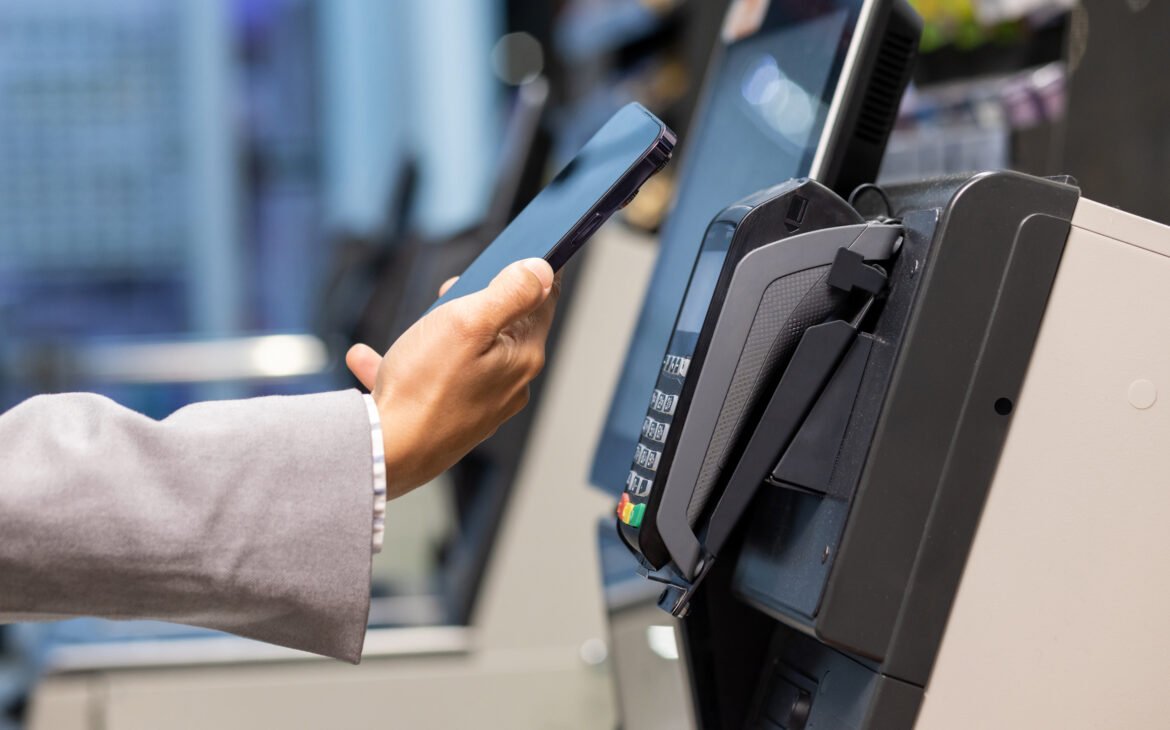
For example, tapping a smartphone against a compatible payment terminal can initiate an NFC communication session.
What Is Bluetooth?
Bluetooth is a wireless communication technology designed to connect devices over short distances.
It is commonly used for continuous communication between devices, including smartphones, wireless headphones, keyboards, computer accessories, speakers and vehicles.
Bluetooth generally operates in the 2.4 GHz radio band and can maintain a connection over considerably greater distances than NFC.
Modern Bluetooth versions also provide improvements in energy efficiency, connection reliability and data capabilities.
Bluetooth is particularly useful when two devices need to remain connected while exchanging information over a period of time.
RFID vs NFC vs Bluetooth: How Are They Different?
The biggest differences involve range, communication method, power requirements and typical applications.
| Feature | RFID | NFC | Bluetooth |
| Main purpose | Identification and data exchange | Very short-range communication | Device-to-device connectivity |
| Typical range | Varies by RFID type | Usually a few centimetres | Typically several metres |
| Frequency | Varies | 13.56 MHz | 2.4 GHz |
| Power | Depends on tag/system | Can operate with passive tags | Usually requires powered devices |
| Common examples | Fobs, inventory tags, access cards | Payments, tags, digital keys | Headphones, speakers, peripherals |
| Smartphone use | Depends on system | Widely supported | Widely supported |
These categories provide a general overview. Actual performance depends on the hardware, protocol and implementation.
Which Has the Longest Range?
Range varies significantly between technologies and specific implementations.
NFC is designed for very short-range communication and generally requires devices to be brought within a few centimetres of each other.
Bluetooth typically operates over several metres, depending on the Bluetooth class, device design and environmental conditions.
RFID has a much broader range of possible applications. Some RFID systems operate at very short distances, while certain UHF RFID systems can support communication over several metres under suitable conditions.
This range flexibility is one reason RFID technology is used in such a wide variety of industries.
Which Technology Uses the Least Power?
Power consumption depends on the specific device and implementation.
Some RFID tags are passive, meaning they receive energy from the electromagnetic field generated by a reader. These tags can operate without a conventional battery.
NFC can also communicate with passive tags that receive energy from the nearby NFC device or reader.
Bluetooth devices generally have their own power source because they maintain an active wireless connection. Bluetooth Low Energy (BLE) was developed specifically to support applications where efficient power consumption is important.
Is NFC a Type of RFID?
NFC is closely related to RFID and uses the same 13.56 MHz frequency associated with high-frequency RFID systems.
NFC was developed around short-range communication and includes features that allow compatible devices to communicate with each other.
This means NFC can be understood as a technology that grew from the broader family of radio-frequency identification and communication technologies.
However, RFID remains a broader category covering numerous standards, frequencies and applications.
Can RFID Work With Smartphones?
Some RFID technologies can interact with smartphones, while others require dedicated readers or specialized hardware.
Modern smartphones commonly include NFC capabilities. Because NFC operates at 13.56 MHz, compatible phones can interact with certain NFC tags and systems.
Other RFID systems may use different frequencies or communication protocols. In these cases, a smartphone may require an external reader or specialized application and hardware.
This is particularly important when dealing with electronic access cards or key fobs.
Can NFC Replace an RFID Key Fob?
In some access-control systems, a smartphone can replace a physical key fob when the system supports official mobile credentials.
The phone may use NFC, Bluetooth or another supported communication method to communicate with the access reader.
Compatibility depends on the access-control system, credential technology and smartphone capabilities.
For example, a building may provide residents with an official mobile-access application. The application can securely associate an authorized credential with the user’s smartphone.
When a physical fob is required, an authorized replacement or duplication service may also be appropriate.
Is Bluetooth More Suitable for Continuous Connections?
Bluetooth is particularly useful when two devices need to stay connected for an extended period.
Wireless headphones are a good example. A smartphone establishes a Bluetooth connection with the headphones and continuously transfers audio while the user moves around.
Other examples include wireless keyboards, computer mice, fitness devices and vehicle infotainment systems.
NFC generally focuses on brief, close-range interactions, while Bluetooth is designed for ongoing wireless connections.
Which Technology Is More Secure?
Security depends on the specific implementation rather than simply the technology’s name.
RFID systems can use different authentication and encryption methods. NFC applications can also incorporate secure credentials and authentication mechanisms. Bluetooth connections can use encryption, authentication and device-level security features.
Payment systems, access-control systems and other sensitive applications often incorporate additional security layers.
Users should keep smartphones protected with strong authentication and use official applications and authorized credentials when accessing secure systems.
Where Is RFID Technology Used Today?
RFID technology is used across many industries.
Retail businesses use RFID tags to track products and inventory. Warehouses use RFID systems to identify and manage assets. Access-control systems can use RFID cards and fobs to manage entry into buildings.
Healthcare organizations can use RFID for asset tracking and identification. Libraries use RFID tags to manage books and automate certain circulation processes.
The flexibility of RFID makes it suitable for applications where wireless identification is required.
How Do You Choose Between RFID, NFC and Bluetooth?
The best technology depends on the intended application.
RFID is particularly useful for identification, tracking and access-control applications. NFC is well suited to very short-range interactions such as contactless payments and digital tags. Bluetooth is useful when devices need to maintain a wireless connection over a longer period.
In many modern products, these technologies can work alongside one another. A smartphone, for example, may include both NFC and Bluetooth while interacting with RFID-based systems through compatible hardware.
Max Mobile and Gifts in Vancouver
Max Mobile and Gifts is the best place for professional phone and iPhone repair services in Vancouver, Canada. The business also offers a wide selection of accessories and gifts for all occasions.
Services include cell phone repair, fob copy, key cutting, passport and PR photo services, mobile accessories, photo copy and printing services, watch battery replacement, luggage, hip hop jewellery, and perfume and cologne.
For customers dealing with electronic access devices, the business provides fob copy services alongside key cutting and mobile-related services.
Conclusion
RFID, NFC and Bluetooth are all wireless technologies, but each serves different purposes.
RFID technology provides a broad framework for radio-frequency identification and is widely used for tracking, identification and access control. NFC focuses on very short-range communication and is commonly found in smartphones, contactless payments and digital access systems. Bluetooth is designed primarily for wireless connections between devices over greater distances.
Understanding the differences in range, frequency, power requirements and applications makes it easier to understand where each technology fits into everyday life.
As smartphones and connected devices continue to evolve, RFID, NFC and Bluetooth will remain important technologies for identification, communication, payments, access and device connectivity.